Understanding the 3R Principle
The 3R concept - Reduce, Reuse, Recycle - is a fundamental principle of sustainable waste management and environmental conservation. This hierarchical approach prioritizes waste prevention and minimization before recycling, helping us minimize our environmental footprint and conserve natural resources.
By following the 3R principle in order of priority, we can significantly reduce the amount of waste we generate, save money, conserve energy, and protect our planet for future generations.
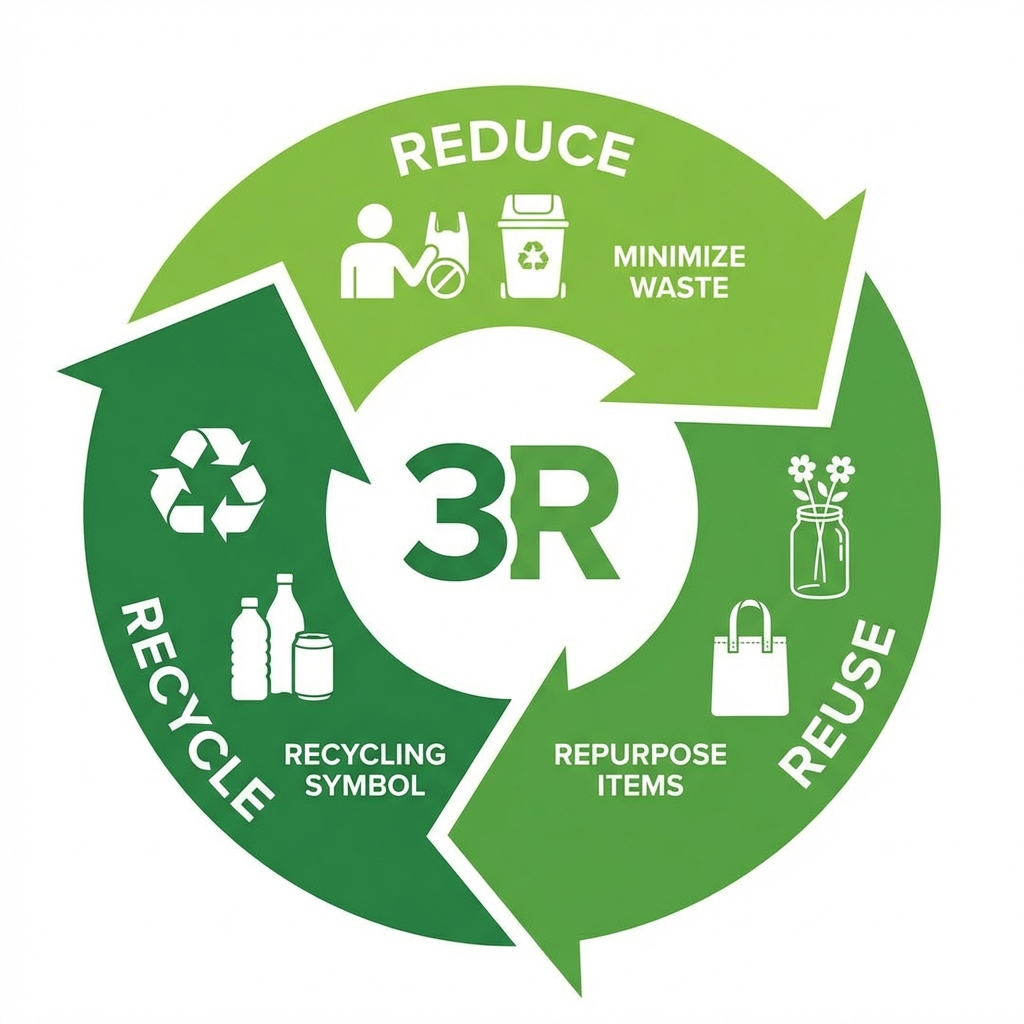
1️⃣ REDUCE
The Most Important R! Reducing means minimizing the amount of waste we create in the first place. This is the most effective way to decrease our environmental impact.
How to Reduce:
- Buy only what you need and avoid impulse purchases
- Choose products with minimal or no packaging
- Use reusable bags, bottles, and containers
- Avoid single-use plastics and disposable items
- Buy in bulk to reduce packaging waste
- Choose quality products that last longer
- Go paperless - use digital documents when possible
- Plan meals to reduce food waste
- Refuse unnecessary items like plastic straws and bags
2️⃣ REUSE
Reusing means finding new ways to use items instead of throwing them away. This extends the life of products and reduces the need for new resources.
How to Reuse:
- Repair broken items instead of replacing them
- Donate or sell items you no longer need
- Use refillable containers and bottles
- Repurpose old items for new uses (upcycling)
- Buy second-hand or vintage items
- Use cloth napkins and towels instead of paper
- Save jars and containers for storage
- Share or borrow items instead of buying new
- Choose rechargeable batteries
3️⃣ RECYCLE
Recycling transforms waste materials into new products, conserving raw materials and reducing energy consumption. It's the last resort after reducing and reusing.
How to Recycle:
- Separate recyclables from general waste
- Clean and dry recyclable materials
- Know your local recycling guidelines
- Recycle paper, cardboard, glass, and metals
- Recycle electronics at designated e-waste centers
- Compost organic waste
- Remove caps and labels from bottles when required
- Flatten cardboard boxes to save space
- Never contaminate recyclables with food waste
Why Follow the 3R Hierarchy?
The 3Rs are listed in order of priority for good reason:
Reduce Comes First
Prevention is better than cure. By reducing consumption and waste generation, we avoid the environmental impacts of production, transportation, and disposal altogether. This is the most effective way to conserve resources and protect the environment.
Reuse is Second
Reusing items extends their useful life without requiring additional energy or resources for processing. It's more efficient than recycling because it doesn't require industrial processing.
Recycle as a Last Resort
While recycling is important, it still requires energy and resources for collection, sorting, and processing. It should be used for materials that cannot be reduced or reused.
Practical 3R Tips for Daily Life
At Home
- Keep a compost bin for food scraps and yard waste
- Use cloth shopping bags and produce bags
- Install a water filter instead of buying bottled water
- Use rechargeable batteries for electronics
- Repair appliances and furniture instead of replacing them
- Start a home garden to reduce food packaging
At Work or School
- Use both sides of paper for printing
- Bring lunch in reusable containers
- Use a refillable water bottle and coffee mug
- Set up recycling bins in common areas
- Go digital with notes and documents
- Share resources and equipment with colleagues
While Shopping
- Choose products with minimal packaging
- Buy in bulk to reduce packaging waste
- Select products made from recycled materials
- Bring your own bags, containers, and produce bags
- Choose quality over quantity for longer-lasting items
- Support businesses with sustainable practices
The Environmental Impact
When we practice the 3Rs, we contribute to:
- Resource Conservation: Preserving natural resources like trees, water, and minerals
- Energy Savings: Reducing energy consumption in manufacturing and processing
- Pollution Reduction: Decreasing air, water, and soil pollution
- Climate Action: Lowering greenhouse gas emissions
- Habitat Protection: Preserving ecosystems and wildlife habitats
- Economic Benefits: Creating jobs and saving money
Make it a Habit
Incorporating the 3Rs into your daily routine doesn't have to be difficult. Start small by choosing one or two practices from each category and gradually build sustainable habits. Every small action counts, and together we can make a significant positive impact on our environment.
Ready to learn more about how recycling works? Visit our Recycling Process page to see the journey of recyclable materials from collection to new products.