Classification of Waste
Waste can be classified into various categories based on its physical, chemical, and biological properties. Understanding these different types of waste is crucial for implementing effective waste management strategies and ensuring proper disposal methods.
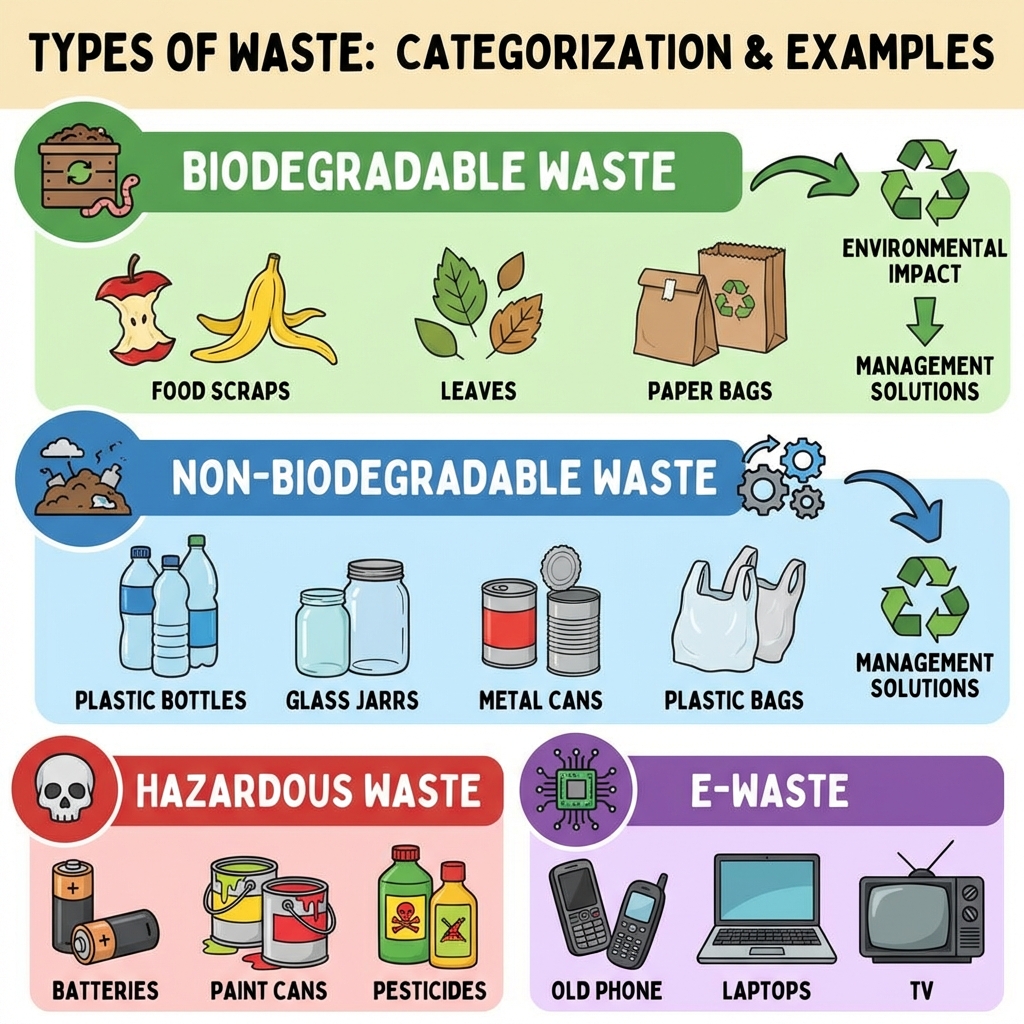
🌿 Biodegradable Waste
Waste materials that can be broken down naturally by microorganisms and decompose into simpler organic compounds.
Examples:
- Food scraps and kitchen waste
- Garden waste (leaves, grass clippings)
- Paper and cardboard
- Wood and natural fibers
- Animal waste
Management: Composting, anaerobic digestion, or biodegradation in landfills.
♻️ Non-Biodegradable Waste
Materials that cannot be broken down naturally by biological processes and persist in the environment for long periods.
Examples:
- Plastics and synthetic materials
- Glass bottles and containers
- Metal cans and products
- Rubber and tires
- Styrofoam and polystyrene
Management: Recycling, reuse, or proper disposal in designated facilities.
⚠️ Hazardous Waste
Waste that poses substantial or potential threats to public health or the environment due to toxic, corrosive, flammable, or reactive properties.
Examples:
- Batteries and accumulators
- Paints and solvents
- Pesticides and herbicides
- Medical and pharmaceutical waste
- Industrial chemicals
Management: Specialized treatment, secure disposal, or recycling at authorized facilities.
💻 Electronic Waste (E-Waste)
Discarded electrical or electronic devices and equipment that contain valuable materials but also hazardous substances.
Examples:
- Computers and laptops
- Mobile phones and tablets
- Televisions and monitors
- Refrigerators and air conditioners
- Printers and scanners
Management: Specialized recycling to recover valuable metals and safe disposal of hazardous components.
🏭 Industrial Waste
Waste generated by industrial activities, manufacturing processes, and commercial operations.
Examples:
- Manufacturing by-products
- Chemical residues
- Scrap metal and materials
- Packaging materials
- Construction debris
Management: Recycling, treatment, energy recovery, or controlled disposal based on waste characteristics.
🏥 Biomedical Waste
Waste generated during medical diagnosis, treatment, or immunization of humans or animals.
Examples:
- Used syringes and needles
- Surgical instruments and materials
- Contaminated bandages and dressings
- Laboratory specimens
- Pharmaceutical waste
Management: Segregation, disinfection, incineration, or autoclaving at specialized facilities.
Additional Waste Categories
Recyclable Waste
Materials that can be processed and converted into new products, including paper, cardboard, glass, metals, and certain plastics. Proper segregation of recyclable waste is essential for effective recycling programs.
Organic Waste
Waste of biological origin that can decompose naturally, including food waste, yard waste, and agricultural residues. This waste can be composted to create nutrient-rich soil amendments.
Construction and Demolition Waste
Debris generated from construction, renovation, and demolition activities, including concrete, bricks, wood, metals, and other building materials. Much of this waste can be recycled or reused.
Municipal Solid Waste
Everyday items discarded by the public, including household trash, commercial waste, and institutional waste. This category encompasses a mix of biodegradable, recyclable, and non-recyclable materials.
Importance of Waste Segregation
Proper segregation of waste at the source is crucial for effective waste management. By separating different types of waste, we can:
- Maximize recycling and resource recovery
- Reduce contamination of recyclable materials
- Ensure safe handling of hazardous waste
- Improve efficiency of waste processing facilities
- Reduce environmental pollution and health risks
- Lower waste management costs
Best Practices for Waste Handling
To contribute to effective waste management, follow these best practices:
- Separate waste into appropriate categories (biodegradable, recyclable, hazardous)
- Use designated bins for different types of waste
- Clean and dry recyclable materials before disposal
- Take hazardous waste to authorized collection centers
- Donate or sell usable items instead of discarding them
- Compost organic waste at home when possible
- Follow local waste management guidelines and schedules
Understanding the different types of waste is the first step toward responsible waste management. Learn more about how to reduce, reuse, and recycle different waste materials on our 3R Concept page.