Definition of Waste Management
Waste management refers to the collection, transportation, processing, recycling, and disposal of waste materials generated by human activities. It encompasses all activities and actions required to manage waste from its inception to its final disposal, including the collection, transport, treatment, and disposal of waste, together with monitoring and regulation of the waste management process.
Effective waste management aims to reduce the adverse effects of waste on human health, the environment, planetary resources, and aesthetics. It is a critical component of sustainable development and environmental protection.
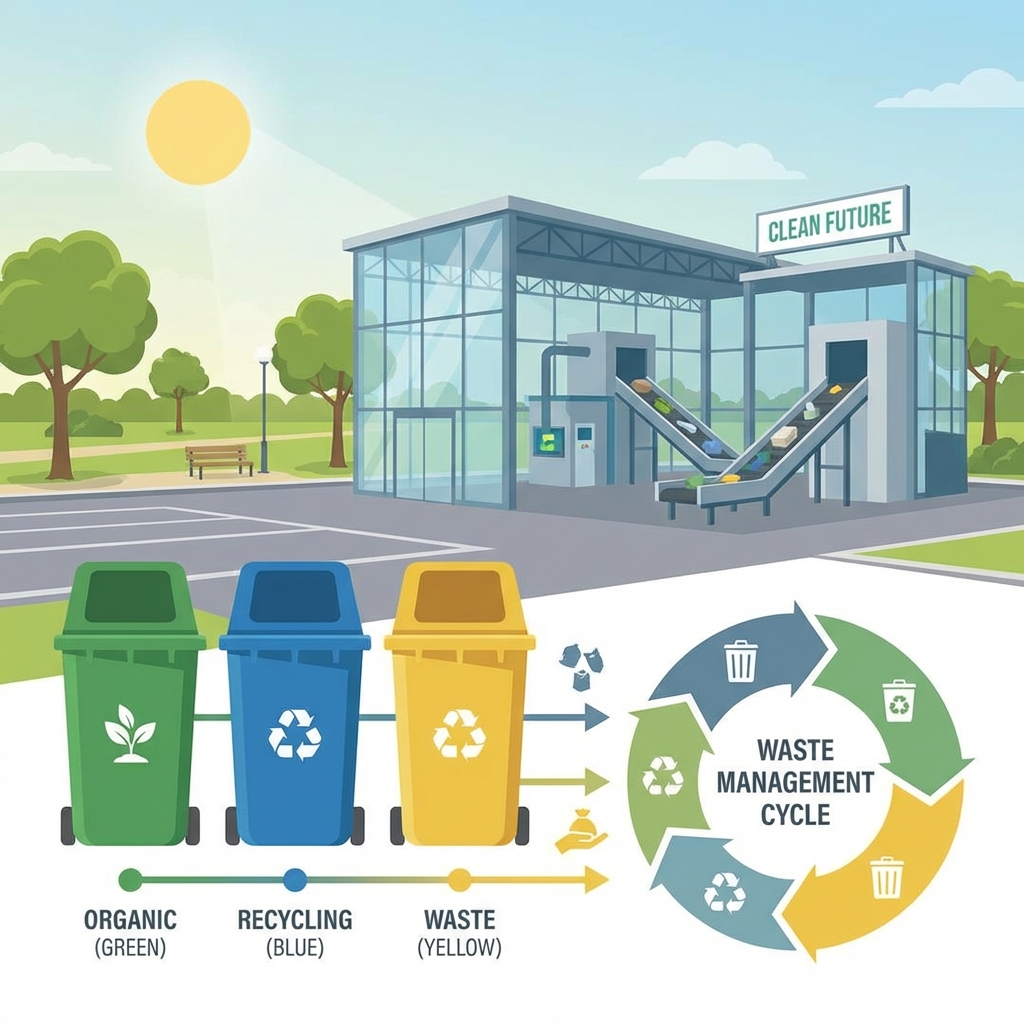
The Importance of Waste Management
Proper waste management is essential for several critical reasons:
- Environmental Protection: Prevents pollution of air, water, and soil, protecting ecosystems and biodiversity
- Public Health: Reduces the spread of diseases and health hazards associated with improper waste disposal
- Resource Conservation: Enables the recovery and reuse of valuable materials, reducing the need for raw material extraction
- Climate Change Mitigation: Reduces greenhouse gas emissions from landfills and waste processing
- Economic Benefits: Creates jobs in the recycling and waste management industry while reducing costs
- Aesthetic Value: Maintains clean and pleasant living environments in communities
Key Objectives of Waste Management
Modern waste management systems are designed to achieve the following objectives:
1. Waste Minimization
Reducing the amount of waste generated at the source through better product design, consumption patterns, and manufacturing processes.
2. Resource Recovery
Maximizing the recovery of valuable materials and energy from waste streams through recycling, composting, and waste-to-energy technologies.
3. Safe Disposal
Ensuring that waste that cannot be recycled or recovered is disposed of safely in properly designed and managed landfills or treatment facilities.
4. Environmental Protection
Preventing pollution and protecting natural resources, ecosystems, and human health from the harmful effects of waste.
Waste Management Hierarchy
The waste management hierarchy is a framework that prioritizes waste management strategies from most to least preferred:
- Prevention: The most preferred option - avoiding waste creation in the first place
- Minimization: Reducing the amount and toxicity of waste generated
- Reuse: Using items multiple times for their original or new purposes
- Recycling: Converting waste materials into new products
- Energy Recovery: Recovering energy from waste through incineration or other processes
- Disposal: The least preferred option - safe disposal in landfills as a last resort
Methods of Waste Management
Collection and Transportation
Organized systems for collecting waste from households, businesses, and institutions, and transporting it to processing or disposal facilities.
Recycling
Processing waste materials to create new products, reducing the need for virgin raw materials and conserving resources.
Composting
Biological decomposition of organic waste into nutrient-rich compost that can be used to improve soil quality.
Incineration
Controlled burning of waste at high temperatures to reduce volume and generate energy, with proper emission controls.
Landfilling
Disposing of waste in engineered facilities designed to minimize environmental impact through proper lining, leachate collection, and gas management.
Challenges in Waste Management
Despite advances in waste management technology and practices, several challenges remain:
- Rapidly increasing waste generation due to population growth and consumption
- Lack of adequate infrastructure in many developing regions
- Insufficient public awareness and participation in waste segregation
- Limited funding and resources for waste management systems
- Complexity of managing diverse waste streams including hazardous and electronic waste
- Need for better policies and enforcement of waste management regulations
The Path Forward
Effective waste management requires a comprehensive approach involving governments, businesses, communities, and individuals. By understanding the principles of waste management and actively participating in waste reduction, reuse, and recycling efforts, we can all contribute to a cleaner, healthier, and more sustainable future.
Learn more about how you can make a difference by exploring the 3R Concept and Recycling Process pages.