How Recycling Works
Recycling is a complex process that transforms waste materials into new products, conserving natural resources and reducing environmental impact. Understanding this process helps us appreciate the importance of proper waste segregation and recycling practices.
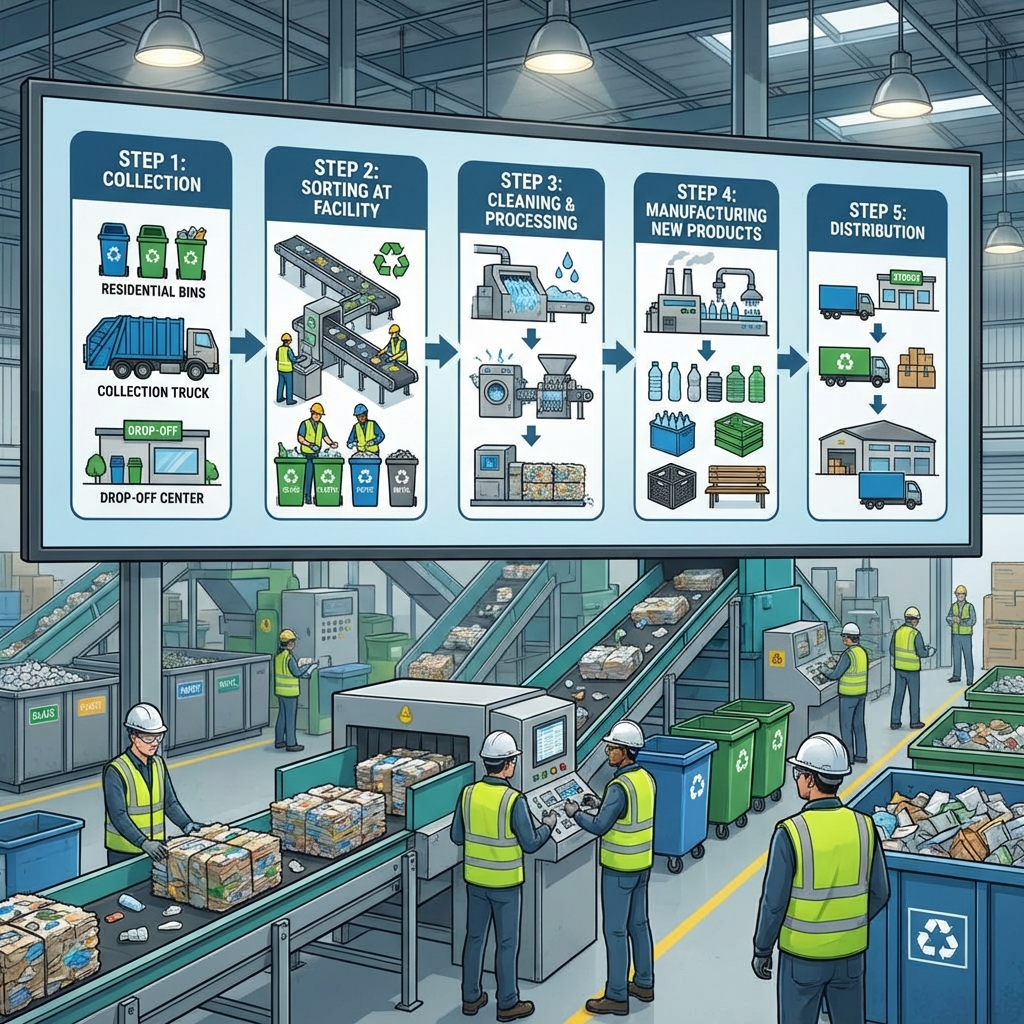
The 5-Step Recycling Process
Collection and Transportation
The recycling process begins with the collection of recyclable materials from homes, businesses, and institutions. This can happen through:
- Curbside Collection: Recyclables are picked up from residential areas on scheduled days
- Drop-off Centers: People bring recyclables to designated collection points
- Deposit/Refund Programs: Consumers return items like bottles for a refund
- Commercial Collection: Businesses and institutions have dedicated recycling services
Once collected, materials are transported to recycling facilities or Material Recovery Facilities (MRFs) for processing.
Sorting and Separation
At the recycling facility, materials are sorted and separated by type and quality. This crucial step ensures that each material can be processed appropriately:
- Manual Sorting: Workers remove non-recyclable items and sort materials by hand
- Mechanical Sorting: Conveyor belts, screens, and magnets separate materials by size and type
- Optical Sorting: Advanced sensors identify and separate different types of plastics and materials
- Magnetic Separation: Magnets extract ferrous metals (iron and steel)
- Eddy Current Separation: Non-ferrous metals (aluminum, copper) are separated using magnetic fields
Materials are categorized into groups: paper, cardboard, plastics (by type), glass (by color), and metals (ferrous and non-ferrous).
Cleaning and Processing
Sorted materials are cleaned to remove impurities, contaminants, and non-recyclable elements. The cleaning process varies by material type:
- Paper and Cardboard: Washed to remove inks, adhesives, and contaminants, then pulped
- Plastics: Washed, labels removed, and shredded into small flakes or pellets
- Glass: Crushed into cullet (small pieces) and cleaned of metal caps and labels
- Metals: Cleaned, shredded, and melted down to remove impurities
After cleaning, materials are processed into raw forms that can be used in manufacturing:
- Paper becomes pulp
- Plastics become pellets or flakes
- Glass becomes cullet
- Metals become molten metal or ingots
Manufacturing New Products
The processed recyclable materials are now ready to be transformed into new products. Manufacturers purchase these recycled materials and use them to create:
- From Recycled Paper: Newspapers, cardboard boxes, tissue paper, office paper, paper towels, and packaging materials
- From Recycled Plastic: Bottles, containers, clothing fibers (fleece), carpets, furniture, plastic lumber, and automotive parts
- From Recycled Glass: New bottles and jars, fiberglass insulation, decorative tiles, and road aggregate
- From Recycled Metals: New cans, automotive parts, construction materials, appliances, and industrial equipment
Manufacturing with recycled materials typically uses less energy and fewer natural resources than producing items from virgin materials.
Distribution and Purchase
The final step completes the recycling loop. New products made from recycled materials are:
- Distributed to retailers and wholesalers
- Sold to consumers in stores and online
- Used in construction, manufacturing, and other industries
When consumers purchase products made from recycled materials, they close the recycling loop and support the recycling industry. Look for products labeled with:
- "Made from recycled materials"
- "Post-consumer recycled content"
- The recycling symbol with percentage indicators
By choosing recycled products, consumers create demand that makes recycling economically viable and encourages more recycling programs.
Recycling Different Materials
Paper Recycling
Paper fibers can be recycled 5-7 times before they become too short to make new paper. The process involves pulping, de-inking, and reforming into new paper products.
Plastic Recycling
Different types of plastics (identified by numbers 1-7) require different recycling processes. PET (#1) and HDPE (#2) are the most commonly recycled plastics.
Glass Recycling
Glass can be recycled indefinitely without loss of quality. It's crushed, melted, and reformed into new glass products at lower temperatures than making glass from raw materials.
Metal Recycling
Metals like aluminum and steel can be recycled repeatedly without degradation. Aluminum recycling saves 95% of the energy needed to produce aluminum from bauxite ore.
Challenges in Recycling
- Contamination: Food residue and non-recyclable items mixed with recyclables
- Mixed Materials: Products made from multiple materials that are difficult to separate
- Market Fluctuations: Varying demand and prices for recycled materials
- Collection Costs: Expenses associated with collecting and transporting recyclables
- Technology Limitations: Some materials are difficult to recycle with current technology
How You Can Help
Make recycling more effective by:
- Cleaning recyclables before placing them in recycling bins
- Knowing what can and cannot be recycled in your area
- Keeping recyclables separate from trash
- Removing caps and labels when required
- Flattening cardboard boxes to save space
- Buying products made from recycled materials
- Supporting local recycling programs
Understanding the recycling process helps us appreciate the importance of proper waste segregation and recycling practices. Learn more about the Benefits of Recycling to see the positive impact of this important process.