Why Recycling Matters
Recycling is one of the most impactful actions we can take to protect our environment and build a sustainable future. The benefits of recycling extend far beyond simply reducing waste - they touch every aspect of our lives, from the air we breathe to the economy we depend on.
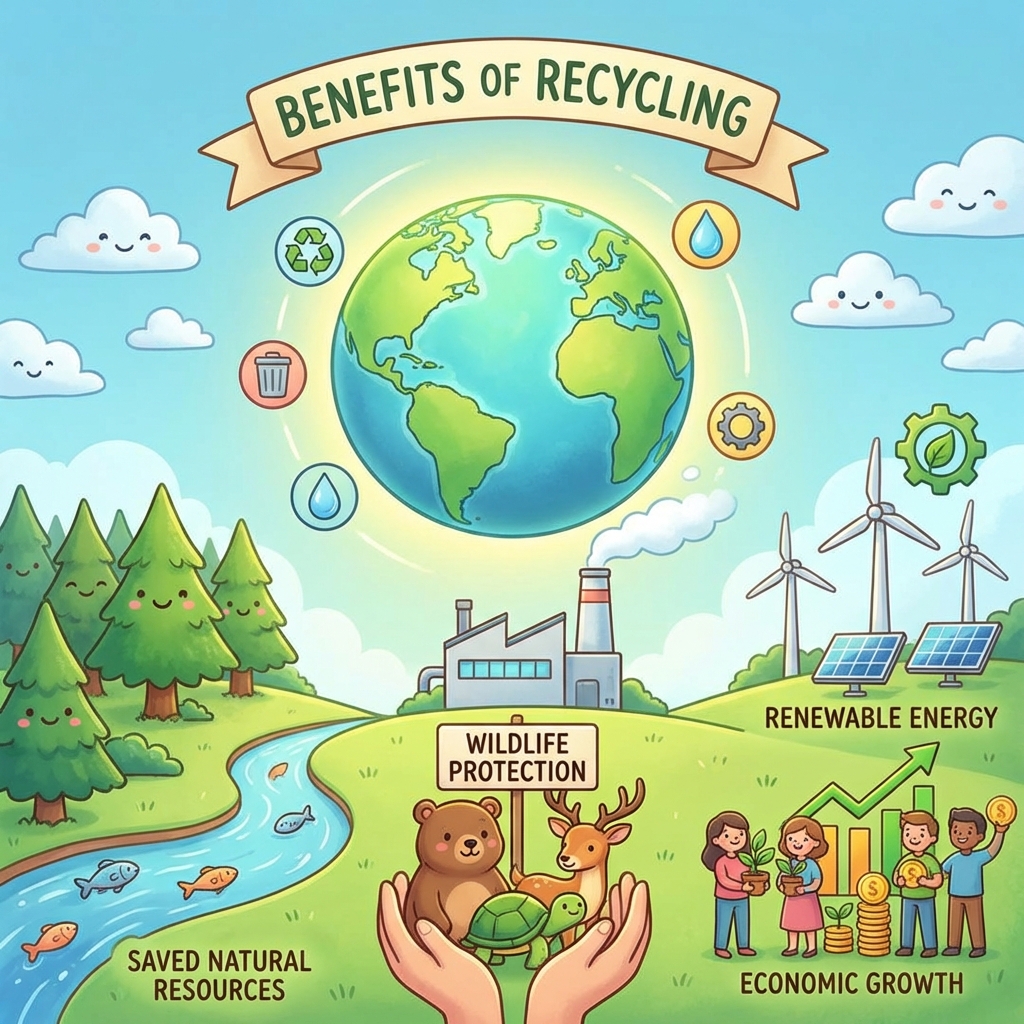
🌍 Environmental Benefits
Recycling provides numerous environmental advantages that help protect our planet:
- Conserves Natural Resources: Reduces the need to extract raw materials like timber, water, and minerals
- Saves Energy: Manufacturing with recycled materials uses significantly less energy than using virgin materials
- Reduces Pollution: Decreases air and water pollution from manufacturing and waste disposal
- Protects Ecosystems: Preserves forests, wetlands, and natural habitats
- Reduces Landfill Waste: Diverts materials from landfills, extending their lifespan
💰 Economic Benefits
Recycling contributes significantly to economic growth and prosperity:
- Creates Jobs: The recycling industry employs millions of people worldwide
- Generates Revenue: Recycled materials are valuable commodities in the market
- Reduces Costs: Lower waste disposal and raw material costs for businesses
- Stimulates Innovation: Drives development of new recycling technologies
- Supports Local Economy: Keeps money circulating in local communities
👥 Social Benefits
Recycling brings communities together and improves quality of life:
- Community Engagement: Brings people together for environmental causes
- Educational Opportunities: Teaches environmental responsibility to future generations
- Cleaner Communities: Reduces litter and improves neighborhood aesthetics
- Health Benefits: Reduces pollution-related health problems
- Social Responsibility: Fosters a culture of environmental stewardship
Environmental Impact in Detail
Climate Change Mitigation
Recycling plays a crucial role in fighting climate change by:
- Reducing greenhouse gas emissions from manufacturing and waste decomposition
- Decreasing methane emissions from landfills
- Lowering carbon dioxide emissions from reduced energy consumption
- Preserving carbon-storing forests and natural areas
Energy Conservation
The energy savings from recycling are substantial:
- Aluminum: Recycling saves 95% of the energy needed to produce aluminum from bauxite ore
- Steel: Recycling saves 60% of the energy required for virgin steel production
- Paper: Recycling saves 40% of the energy needed to make paper from trees
- Plastic: Recycling saves up to 70% of the energy used in virgin plastic production
- Glass: Recycling saves 30% of the energy needed to make glass from raw materials
Resource Conservation
Recycling helps preserve our planet's finite resources:
- One ton of recycled paper saves 17 trees, 7,000 gallons of water, and 4,000 kilowatts of electricity
- Recycling one aluminum can saves enough energy to power a laptop for 3 hours
- Recycling steel and tin cans saves 74% of the energy used to produce them
- Glass can be recycled endlessly without loss of quality or purity
Economic Impact
Job Creation
The recycling industry is a significant employer:
- Creates jobs in collection, sorting, processing, and manufacturing
- Provides employment opportunities at all skill levels
- Supports ancillary industries like transportation and equipment manufacturing
- Generates more jobs per ton of waste than landfilling or incineration
Cost Savings
Recycling provides financial benefits for communities and businesses:
- Reduces waste disposal costs for municipalities
- Lowers raw material costs for manufacturers
- Decreases energy bills through reduced consumption
- Generates revenue from selling recyclable materials
- Reduces environmental cleanup costs
Social and Community Benefits
Public Health
Recycling contributes to healthier communities by:
- Reducing air pollution from manufacturing and incineration
- Decreasing water contamination from landfill leachate
- Minimizing exposure to toxic substances
- Improving overall environmental quality
Education and Awareness
Recycling programs serve as educational tools:
- Teach children about environmental responsibility
- Raise awareness about consumption and waste
- Promote sustainable lifestyle choices
- Foster critical thinking about resource use
Long-Term Benefits
Sustainable Development
Recycling is essential for sustainable development:
- Ensures resources are available for future generations
- Supports circular economy principles
- Reduces dependence on finite natural resources
- Promotes sustainable consumption patterns
Global Impact
The benefits of recycling extend globally:
- Reduces international conflicts over natural resources
- Decreases global pollution and environmental degradation
- Supports international climate change agreements
- Promotes global environmental cooperation
Making a Difference
Every item you recycle contributes to these benefits. Whether it's a single aluminum can, a cardboard box, or a glass bottle, your recycling efforts make a real difference. By participating in recycling programs and choosing products made from recycled materials, you're investing in a cleaner, healthier, and more sustainable future for everyone.
Ready to take action? Visit our Contact Us page to learn how you can get involved in local recycling initiatives.